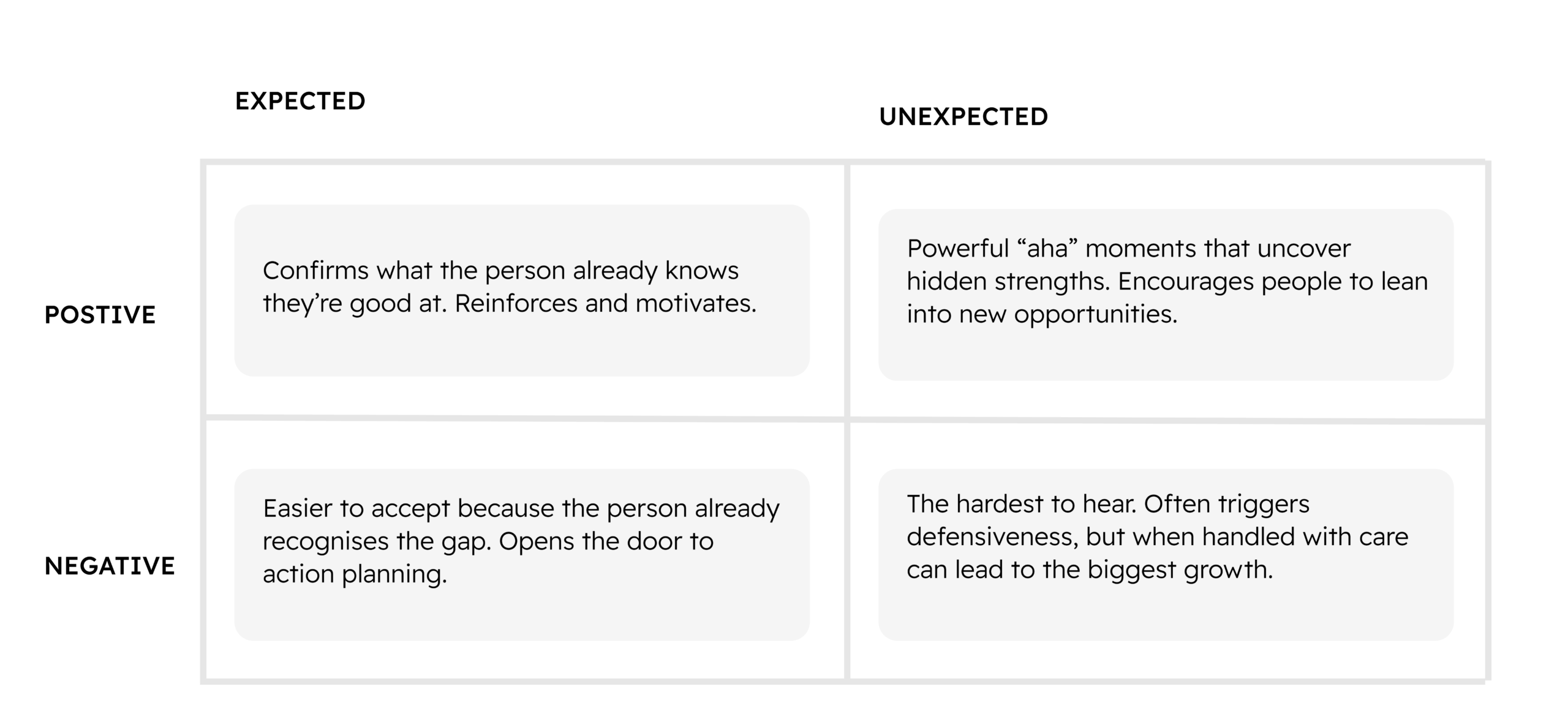
Anticipate the response: a 4-quadrant feedback framework
Anticipate the response: a 4-quadrant feedback framework
5 minutes
Think of feedback through a four-quadrant matrix:
How to apply it
1
Identify the quadrant
Before giving feedback, ask: Is this positive or negative? Will it be expected or unexpected?
2
Adapt your approach
Positive / Expected: Reinforce and celebrate. Ask how they can use this strength elsewhere.
Negative / Expected: Be empathetic. Explore what they’ve tried, then co-design next steps.
Positive / Unexpected: Shine a light on it. Help them see the strength and encourage them to build on it.
Negative / Unexpected: Go slow. Provide context, invite reflection, and support them through the surprise.
3
Use questions to open dialogue
For example:
“What have you already tried in this area?”
“Why do you think this feedback feels unexpected?”
“How could you use this as an opportunity to grow?”
4
Spot patterns over time
If most feedback is “unexpected negative,” expectations may be unclear. If there’s little “unexpected positive,” strengths might not be fully recognised.